• What We Mean When We Say Brand

    What We Mean When We Say Brand

    A brand is not a logo or a font. It is what people believe and say about you when you are not in the room.

    Rob Sulzer, President, Orca Concrete   |   August 2026

    A few weeks back, I mentioned I wanted to write about building an enduring company, one that shareholders and employees can both be proud of. That article kept leading me back to a related idea, one I think gets misunderstood constantly in this industry. Brand.

    Ask most people in specialty construction what their brand is, and they will point to a truck wrap, a color scheme, maybe a slogan on a hard hat sticker. I get why. Those things are visible; they are easy to budget for, and a designer can hand you a finished product in a few weeks. But none of that is actually your brand. It is just the packaging.

    Your brand is not what you put on the truck. It is what the customer tells their project manager about you after your truck leaves the job site.

    In concrete cutting, coring, demolition, and joint sealing, we are rarely the general contractor. We are rarely the name on the sign out front. We are the crew that shows up, does precise, dangerous work on a tight schedule, and moves on to the next site. That means our reputation gets built entirely through what happens in the gaps between the visible parts of a project. Whether we showed up on time. Whether the cut was clean the first time. Whether we told someone early that a schedule was slipping, or let them find out the hard way.

    That is the brand. It is not a marketing department’s job. It is every single person on a crew, every single day, whether they think of it that way or not.

    Here is the part that took me longer to fully understand: running crews across different industries before this one. Brand is not just how customers see you. It is how your own people see the company from the inside, because that internal experience eventually becomes the external one. A crew that does not believe in how the organization is run and how they are treated will not go out of their way to protect the company’s reputation on a job site. Why would they? A crew that does believe in it, that feels respected, trained, and safe, will represent the company well even when nobody from the office is watching. Especially then.

    You cannot fake a brand from the outside. Customers and employees eventually see the same company, whether leadership wants them to or not.

    That is why zero excuses has to apply to leadership first. If we ask a crew to hold a tight schedule but do not give them the equipment or staffing to do it safely, that gap gets noticed. If we say safety comes first but rush a job when a deadline is tight, that gets noticed too. People do not build trust in a company based on the words on the website. They build it based on whether those words hold up under pressure, on a hot afternoon, three hours behind schedule, with a customer calling for updates.

    In a market like Dallas-Fort Worth, reputation moves fast, and it moves through word of mouth more than any advertisement ever will. A superintendent who had a good experience with our crew tells the next one. A project manager who got a straight answer from us when a job hit a snag remembers that the next time bids come in. That kind of trust cannot be bought with a nicer logo. It gets built one job at a time, by people doing the work the same way whether someone from corporate is standing there or not.

    So when I think about what we stand for as a company, I do not start with visual identity. I start with questions like these. When a customer thinks of Orca Concrete, what is the first thing that comes to mind? Reliability. Precision. Honesty when something goes wrong. When one of our own crew members describes this place to a friend who is thinking about applying, what do they say? Do they say it is a good place to build a career, or do they say it is just a job that pays the bills?

    Both of those answers are our brand. The logo and the truck wrap just carry it around.

    Building a real brand in this industry means treating culture as seriously as we treat safety standards or equipment maintenance. It means training crews not just on technique, but on what we expect them to represent when they are the only face of this company a customer may ever see. It means leadership being willing to have the hard conversations internally so the easy conversations externally actually mean something.

    None of this happens with a rebrand or a new set of colors. It happens on job sites, in the way people are treated, in the standards nobody lowers even when it would be easier to. That is the brand we are trying to build here. Not a logo people recognize. A reputation people trust.

  • 8 Marketing Myths Keeping Mission-Driven Organizations Stuck (And What To Do Instead)

    8 Marketing Myths Keeping Mission-Driven Organizations Stuck (And What To Do Instead)

    Every mission-driven organization has heard the same marketing advice on repeat. Post more. Post less. Chase virality. Stay authentic. Buy ads. Never buy ads. It is a lot of noise, and most of it is built on myths that were never true to begin with. If your team has ever felt like you are doing everything “right” and still not seeing the growth your mission deserves, the problem might not be effort. It might be the myths guiding that effort. Let’s break down eight of the biggest ones and replace them with strategies that actually move the needle.

    Myth 1: A Small Budget Means Small Results

    This one gets repeated so often that organizations start to believe it before they even try. The truth is that budget size and impact are not directly correlated. Strategy, consistency, and clarity of message will outperform ad spend every time. Some of the most powerful campaigns we have seen came from organizations with modest budgets and an unshakeable clarity about who they serve and why. Spend your dollars on strategy first. The tools are secondary.

    Myth 2: More Content Always Wins

    Volume without direction just creates noise. A single story told well, distributed with intention, and backed by data will always outperform a content calendar stuffed with filler. Before your team creates another post, ask what job that content is doing. Is it building trust? Driving a specific action? Educating a new audience? If you cannot answer that question, you are not ready to hit publish.

    Myth 3: Your Team Has To Do Everything In-House

    Mission-driven organizations often carry an unspoken belief that outsourcing marketing work is somehow less committed to the cause. It is the opposite. Bringing in specialized expertise for email strategy, SEO, or brand storytelling frees your internal team to focus on the work only they can do. A strong external partner does not replace your mission. It amplifies it.

    Myth 4: Social Media Growth Equals Organizational Growth

    Followers are a vanity metric until they convert into something real. Donations, volunteers, advocates, or customers, depending on your model. A social page with modest but highly engaged followers who take action will always outperform a page with a huge audience that never converts. Track the metrics that actually tie back to your mission, not just the ones that look good in a screenshot.

    Myth 5: SEO Takes Too Long To Matter

    SEO does take time; that part is true. But “too long” is relative to how long your organization plans to exist. If you are building for the next five, ten, or twenty years, SEO is one of the highest return investments available. The organizations that started their SEO strategy a year ago are the ones showing up first in search results today. The best time to start was last year. The second best time is now.

    Myth 6: Authenticity Means No Strategy

    Somewhere along the way, “authentic” got confused with “unplanned.” You can absolutely be authentic and strategic at the same time. In fact, the most trusted brands in the mission-driven space are the ones that plan their storytelling with intention while staying true to their voice. Strategy is not the enemy of authenticity. It is what gets your authentic story in front of the people who need to hear it.

    Myth 7: One Big Campaign Will Fix Everything

    Every organization wants the campaign that changes everything overnight. The reality is that sustainable growth comes from a rhythm of smaller, consistent campaigns that build on each other, not a single swing for the fences. Think of your marketing strategy like compound interest. Small, consistent deposits of trust and visibility add up to something far bigger than one flashy moment ever could.

    Myth 8: Marketing And Mission Are Separate Departments

    This might be the biggest myth of all. Marketing is not a department that sits next to your mission. It is the megaphone for it. Every email, every campaign, every piece of content is an extension of the impact you are trying to create. When your team treats marketing as core to the mission rather than a support function, everything from messaging to budget decisions starts to align.

    Building A Marketing Strategy That Matches Your Mission

    None of these myths are new, and you have probably heard versions of all eight before. What matters now is what your organization does with that clarity. Growth does not require a bigger team, a bigger budget, or a viral moment. It requires a strategy built on what actually works, applied consistently over time.

    If your organisation is ready to move past the myths and build a marketing strategy that matches the size of your mission, that is exactly the kind of work we love to do together.

  • Building Something That Outlasts Us

    Building Something That Outlasts Us

    An enduring company has to work for everyone who builds it, not just the people who own it.

    Rob Sulzer, President, Orca Concrete   |   August 2026

    I think about this more often than people probably expect from someone who spends most of his day chasing schedules and answering phone calls, putting out fires. Not next quarter. Not even next year. I think about what Orca Concrete looks like ten, twenty years from now, when I am not the one taking the six in the morning call, and when guys running crews today are the ones training the next generation of cutters and operators.

    That is what I mean when I talk about building something sustainable. I am not talking about solar panels on the shop roof, though I have nothing against that. I am talking about a company built to last. One that is still standing, still respected, and still doing right by the people inside it, building it, long after any of us running it today have moved on.

    In specialty construction, it is easy to get pulled into short-term thinking. You chase the next bid. You solve today’s problem on today’s job site. You measure the week by whether the schedule held and the invoice went out on time. All of that matters, and I am not going to pretend otherwise. But if that is the only thing we are measuring, we are running a business. We are not building a company.

    A company that only works for the shareholders is not really built to last. An enduring company has to work for ALL stakeholders.

    Here is what I mean by that. A business can look healthy on paper for a while even if the people doing the work do not feel proud of where they work. You can hit your numbers and still have a crew that shows up because they need the paycheck, not because they believe in what they are part of. That is not sustainable. It might survive a year or two, but eventually the good people leave, the training investment walks out the door with them, and you spend all your energy replacing talent instead of developing it.

    So when I talk about building an enduring company, I mean one where the shareholders do well because the team does well, not instead of it. Those two things are not in competition. A crew that is trained properly, paid fairly, given real safety equipment instead of the bare minimum, and trusted to make calls on site- that crew produces better work, fewer callbacks, and fewer injuries. That shows up in the numbers too. It just shows up slower, and it shows up more honestly.

    I want the people who work here to be able to point at a building, a new highway, a hospital wing, an airport expansion, and tell their kids they helped make that happen, and mean it with pride. Not because a marketing team told them to say that, but because the company actually treated the work, and the people doing it, as it mattered.

    Twenty years from now, I want the twenty-two-year-olds we hire this year to be the ones training crews of their own, telling people this is a company worth building a career in, not just a job to get through.

    That means investing in things that do not show up on next month’s income statement. Real training programs instead of throwing someone a set of keys and a saw. Clear paths for advancement so a laborer today can see what it takes to run a crew, and eventually run a division. Safety that is treated as a design principle for how we operate, not a checklist we complete after something already went wrong. Honest conversations about what the company can and cannot offer, instead of vague promises nobody plans on keeping.

    None of that means we stop caring about growth or profitability. It means we get there in a way that holds up. Financial discipline is part of taking care of your people, because a company that runs itself into the ground cannot protect anybody’s job. Growth and loyalty to your team are not opposites. Done right, each one funds the other.

    Dallas Fort Worth is growing fast, and specialty construction is right in the middle of that growth. We get to be part of building the infrastructure this region will run on for decades. I want our growth to be something the whole team can point to and say, look at what we built, not something that only shows up as a number for people who never set foot on a job site.

    That is what I think an enduring company actually looks like. Not one that just survives long enough to get sold. One that people are still proud to be part of, long after the job that made it famous is finished and the next one has already started. Zero excuses was never just about the cut. It is about the responsibility we carry to build something worth sticking around for.

    Next time, I want to talk about what it actually means to build a brand in this industry. Not the logo on the truck or the font on the business card. What customers and employees believe about you when you are not standing in front of them. That is the real brand, and it is worth talking through.

  • What Fort Worth Is Standing On

    What Fort Worth Is Standing On

    A closer look at the trades quietly powering one of the fastest-growing regions in America

    Rob Sulzer, President, Orca Concrete   |   July 2026

    Dallas-Fort Worth is one of the fastest-growing regions in the country. New rooftops, new highways, new hospitals, new distribution centers. People move here for the jobs, and then more jobs get built to support the people who moved here. It is a cycle that has been running for years now, and it does not look like it is slowing down.

    What most people never think about is what that growth is physically standing on. Every new building in this region, every widened highway, every hospital wing, every warehouse the size of a small town, all of it depends on a layer of work that almost nobody sees and almost nobody thanks. That layer is us. Concrete cutting, coring, demolition, and joint sealing crews who show up before the cranes, before the framing, before any of it looks like anything yet.

    I want to spend more time on this theme than I usually do, because I think it matters, and because I think our own people deserve to hear it said plainly more than once.

    Growth Does Not Build Itself

    When a company decides to put a distribution center outside Fort Worth, or a hospital system decides to expand a campus in Arlington, or the state decides a stretch of highway needs to be widened, none of that happens because someone signed a piece of paper. It happens because hundreds of people in unglamorous jobs went out and did the physical work required to make it real.

    Somebody has to demo the old slab before the new one goes in. Somebody has to core the penetrations for plumbing and electrical before the walls go up around them. Somebody has to saw the control joints so the concrete does not crack under the Texas heat and the Texas cold within the same calendar year. That somebody is a crew in steel-toed boots and safety glasses, out there before most of the region has had its coffee.

    Growth does not happen because someone signed a piece of paper. It happens because someone went out and did the physical work to make it real.

    The Buildings We Never Get Credit For

    Over the years, our crews have worked in and around hospitals where families waited on the worst day of their lives and the best day of their lives, sometimes in the same wing. We have worked on airport terminals that now move tens of thousands of travelers a day without those travelers ever knowing a demo crew was there first. We have worked on hotels that hosted weddings and reunions and business trips that shaped somebody’s career. We have worked on office towers where deals got made that changed companies. And we have worked on warehouse after warehouse, the kind that gets a package to somebody’s door two days after they clicked buy, without them ever wondering how that floor got flat enough and strong enough to hold the racking and the forklifts and the volume.

    None of those buildings will ever have our name on a plaque in the lobby. That is fine. That was never the point. But I think it is worth saying out loud, at least once in a while, that the hospital wing, the terminal, the hotel ballroom, the office floor, the warehouse slab, all of it started with a crew like ours doing the part that had to happen before anything else could.

    What the Job Actually Costs the People Doing It

    I do not want to romanticize this without being honest about what it costs. This is hard, physical, demanding work. Our crews are out in one hundred-degree Texas summers wearing the safety gear the job requires, because the gear is not optional just because it is hot. They are out in the cold snaps we get in January, when the wind makes forty degrees feel like twenty. They are lifting, kneeling, cutting, and hauling for ten and twelve-hour days, often on schedules set by somebody else’s deadline.

    This is the kind of work where your body knows exactly what you did that day, and it lets you know the next morning again. It is not a desk job with a view. It is real labor, done by real people, and I think our industry as a whole has gotten comfortable letting that go unsaid for too long.

    I have said before that I did not come up through the trades myself. I came into this industry from the outside, scaling operations across a few different sectors before I landed here. But the longer I do this, the more convinced I am that the people doing this physical work are carrying more of the American economy on their backs, literally, than almost anyone else gets credit for.

    The people doing this physical work are carrying more of the American economy on their backs than almost anyone else gets credit for.

    Why Specialty Construction Is Different

    General contractors get the recognition. Architects get the renderings in the magazines. Developers get their names on the building. Specialty trades like ours get none of that, and honestly, most of us are not chasing it. But there is a difference between not chasing recognition and not deserving it.

    What makes specialty construction different is that we are almost always first and almost always under the tightest window. A general contractor has months. A specialty crew doing cutting, coring, or demo often has days, sometimes hours, to get a piece of the puzzle done correctly so the rest of the schedule can move. There is no room for a mistake to be someone else’s problem to fix later. If we get it wrong, the whole timeline behind us gets it wrong too.

    That pressure is exactly why our value, act with safe urgency, exists. It is not a poster on a wall. It is the actual operating reality of being the trade that everyone else is waiting on. We move fast because the region needs us to. We do it safely because the people doing the moving are the same people we send home to their families every night.

    The Part I Want Our Team to Hear

    If you are on one of our crews reading this, I want you to know that I do not take for granted what you do every day. I know the heat. I know the hours. I know the weight of the equipment and the weight of the deadlines. I know you do not get thanked nearly as often as you should, by customers, by the industry, or honestly, by us.

    So let me say it here, in writing, where it can be read more than once. What you do is not small work. It is the first link in a chain that ends in hospitals opening, warehouses shipping, highways holding up, and this region continuing to grow the way it has been growing for years. Every building somebody drives past and takes for granted started with somebody like you showing up first.

    A Region Built on People Who Show Up

    Dallas Fort Worth is going to keep growing. More companies will move here. More families will follow. More hospitals, more warehouses, more roads, more of everything this region needs to keep up with itself. And every single piece of that growth is going to need crews willing to do the hard, early, physical work that makes the rest of it possible.

    That is what Orca Concrete is. That is what our people are. Not the name on the building. The reason the building was possible at all. I am proud of that, and I think this region owes a quiet debt to every crew like ours that shows up before sunrise, works through conditions most people would not last a shift in, and gets it right the first time so nobody downstream ever has to think twice.

  • The Buildings You Walk Into Started With Someone Like Us

    The Buildings You Walk Into Started With Someone Like Us

    Why the specialty construction trades are the backbone of the American economy

    Rob Sulzer, President | July 2026

    I was on a job site last month, standing next to a slab we had just cut and cored for a new distribution center going up outside Fort Worth. It was ninety-four degrees. My crew had been out there since six in the morning. Nobody was complaining. Nobody was watching. They were just doing the work, the way they do it every single day.

    That moment stuck with me, and it is why I wanted to talk about our industry this week instead of a single job or a single skill. Because I think we forget, even inside our own company, just how much of the world around us exists because someone in a hard hat and steel-toes showed up and did the unglamorous part first.

    We Are the Part Nobody Sees

    Think about everything you touched today. The road you drove on. The hospital where your kid was born. The airport terminal you rushed through last week. The hotel you stayed in on your last trip. The office building where you sat in a meeting. The Amazon warehouse that got your package to your door in two days.

    Every one of those started as raw ground and a set of drawings. Every one of those needed someone to cut the openings, core the penetrations, saw the joints, and demo what had to come out before anything new could go in. That someone is us. That someone is specialty construction. We are rarely the name on the building. We are rarely the name people thank. But we are the reason the rest of it was possible at all.

    We are rarely the name on the building. But we are the reason the rest of it was possible at all.

    This Work Is Hard, and That Is the Point

    Let us be honest about what this industry actually asks of people. It asks them to work in triple-digit heat and in cold. It asks them to lift, kneel, cut, and haul for ten- and twelve-hour stretches. It asks them to show up before the sun and leave after it sets, on schedules that do not bend just because the weather did not cooperate.

    This is blue-collar labor in its truest form. It is physical. It is demanding. It does not care how you feel that morning. And I have deep respect for anyone who chooses this life, because it is a choice you make over and over again, every single shift.

    I did not come up through the trades myself, but I have spent enough years now standing next to the people who did to know this much. The economy does not run on meetings and forecasts. It runs on people willing to do hard physical work in tough conditions so that everything else can happen on top of what they built.

    Infrastructure Is a Promise We Keep to Each Other

    When people talk about infrastructure, they usually mean the finished product. The highway. The bridge. The terminal. What they miss is that infrastructure is really a chain of promises. A contractor promises an owner a building. A general contractor promises a schedule. And somewhere in that chain, a company like ours promises that the cutting, coring, demolition, and joint sealing will be done right, on time, and safely, so that everyone downstream can keep their promise too.

    That is not a small thing. Roads that do not fail. Hospitals that open on schedule. Warehouses that ship on time because the floor was flat and the joints were sealed correctly. All of that traces back to specialty trades who did their part right the first time, under real pressure, in real conditions.

    Infrastructure is a chain of promises, and our part of that chain is often the first link.

    The Real Heroes Wear Work Boots

    I use the word hero carefully, because I do not think it should be handed out for free. But I will use it here. The people who show up to a job site every day, in the heat and the cold, doing heavy labor so the rest of the country can go about its business without ever thinking about how the building got there- those people have earned it.

    They are not chasing recognition. Most of them would tell you they are just doing their job. But someone needs to say it plainly. What our crews do every day keeps this country moving forward. It keeps the economy building. It keeps hospitals opening, warehouses shipping, and roads holding up under the weight of everyday life.

    Why I Wanted to Say This

    Our tagline is precision cuts, expert crews, zero excuses. I think about that phrase differently after standing on that slab last month. It is not just a promise to our customers. It is a description of the people who make that promise true every single day, in conditions most people would not last a single shift in.

    So this week, take a minute to notice the buildings and roads around you a little differently. Somebody like us was there first. And somebody like the people on our crews earned every bit of credit for what came after.

  • Zero Excuses Is a Culture, Not a Slogan

    Zero Excuses Is a Culture, Not a Slogan

    How ownership, communication, and safe urgency come together to keep our “expert crews” performing day in and day out.

    Rob Sulzer, President | July 2026

    Our tagline at Orca Concrete is “Precision cuts. Expert crews. Zero excuses.” People sometimes ask me about that last part. Isn’t “zero excuses” a little harsh? Doesn’t that create a culture of fear, where people hide mistakes instead of owning them?

    It’s a fair question, and the answer matters because a lot of companies get this exactly backwards. I know I have. So let me explain what zero excuses actually means inside our walls, and why I believe it’s the reason good people stay.

    Zero excuses doesn’t mean zero mistakes. It means zero hiding, zero blaming, and zero surprises.

    Excuses and Ownership Can’t Live in the Same Building

    An excuse is a story about why something isn’t your problem. Ownership is a statement about what happens next. Those are two completely different postures, and a company culture is really just a measure of which one is winning.

    In an excuse culture, a missed deadline comes with a paragraph about traffic, the other trades, the weather, and the customer. In an ownership culture, it comes with a phone call that says here’s where we are, here’s why, here’s the recovery plan, and here’s what I’m doing so it doesn’t happen again. Same event. Completely different company.

    Notice something: ownership is communication. You cannot own a problem silently. The crew member who flags an issue early, the supervisor who calls the customer before the customer calls him, the estimator who says “I missed that, here’s the fix” out loud in a meeting. That’s zero excuses in practice, and every one of those moments is a conversation.

    Why Zero Excuses Requires Zero Fear

    Here’s the part that companies get backwards. They think accountability means consequences for mistakes. So people learn to hide mistakes, and now you have an excuse factory with extra steps.

    Real accountability runs on safety. Not just physical safety, though, in our line of work, that’s always first. What I mean is the safety to say “I got that wrong” without it ending your week. When people trust that honesty is cheaper than hiding, problems surface while they’re still small, which is the entire engine behind our fast turnarounds and our safety record.

    So at Orca, the punishable offense is never the mistake. It’s the cover-up, the silence, the “I didn’t think it mattered.” Get it wrong and say so, and you’ll get help and respect. That’s not softness. That’s the hardest standard there is, because it demands honesty from everyone, starting with me.

    The mistake costs us an hour. The hidden mistake costs us a customer.

    Culture Is Why Expert Crews Stay Expert Crews

    In this trade, everyone is fighting for skilled people. Operators who can read a slab, crews who can work a live site around other trades without friction. You can’t buy that on short notice, and you can’t keep it with wages alone.

    What keeps expert crews is a place worth being expert at. People stay where their judgment is respected, where speaking up is rewarded, where the standard is high and applied to everyone, including the guy whose name is on the door. They leave places where they’re treated as interchangeable, where problems roll downhill, and where the loudest voice wins instead of the most honest one.

    Every hour we invest in culture pays us back twice. Once in the quality and safety of the work, and again in the people who choose to stay and get better here instead of taking their skills across town. In a market as competitive as DFW, retention is a strategy, and culture is how you execute it.

    The Standard Travels

    Here’s the final piece. Culture isn’t contained by your shop walls. It rides in the truck to every site. It shows up in how our people treat the GC’s superintendent, the other trades, the inspector, and each other when things get tense. Customers hire our culture as much as our saws, whether they realize it or not.

    So when we say zero excuses, we’re making a promise in three directions at once. To our customers: you’ll hear the truth from us first, with a plan attached. To our crews: your honesty will always be safer than your silence. And to ourselves: the standard doesn’t bend on the hard days, because the hard days are the only days a standard is worth anything.

    Act with safe urgency. Communicate relentlessly. Own everything. That’s not three ideas. It’s one culture. And it’s the one we build at Orca Concrete at the start of every single day.

  • H&S Standards Are Shifting — Here’s What I’m Seeing on the Ground

    H&S Standards Are Shifting — Here’s What I’m Seeing on the Ground

    A practical update from someone scaling a concrete operation in 2026

    In this industry, you learn fast that “we’ve always done it this way” is one of the most expensive sentences you can say. The regulatory landscape in 2026 is not what it was three years ago — and if your safety programme hasn’t kept up, you’re carrying more risk than you realise.

    I spend a lot of my time thinking about how to scale Orca Concrete the right way. That means building the right team, the right processes, and the right culture. And increasingly, it means making sure our health and safety programmes reflect where the standards actually are today, not where they were when we last did a major review.

    What follows is what I’m seeing on the ground in 2026. Not from a regulatory textbook, but from running a concrete cutting and demo operation in Dallas-Fort Worth and paying close attention to what’s changing around us.

    Silica Dust: This One Can’t Be Ignored

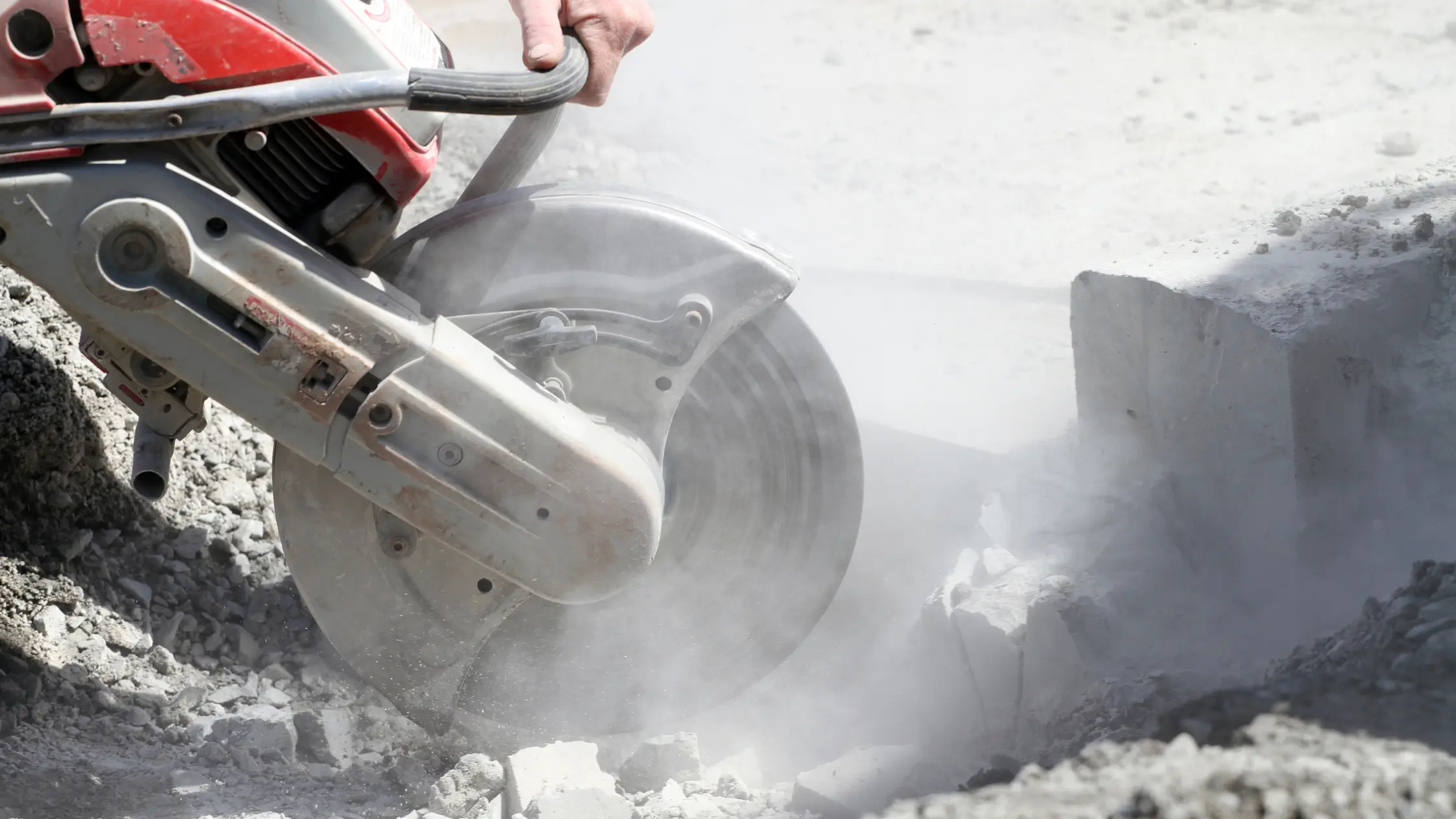
    If you’re in concrete cutting, coring, grinding, or demo, silica dust is part of your daily reality. And the standards around it have tightened significantly. OSHA’s permissible exposure limits have come down, enforcement activity has gone up, and the expectation that you have documented, active dust control programmes — not just PPE on a shelf — is now non-negotiable.

    At Orca Concrete, we’ve taken this seriously because the consequences of not taking it seriously are permanent. Silicosis doesn’t go away. So we’ve invested in wet cutting methods, local exhaust ventilation, proper respiratory equipment, and health surveillance for our crews. It’s not optional. It’s the job.

    If your dust control programme hasn’t been looked at since 2023, you’re likely behind the current standard. Don’t wait for an inspection to find that out.

    Psychosocial Risk: Yes, This Applies to Us Too

    I’ll be honest, when I first heard “psychosocial risk” in the context of a concrete operation, my initial reaction was scepticism. We’re in the trades. We cut concrete. But the more I looked at it, the more I understood why it matters.

    Our crews work physically demanding jobs, often in high-pressure environments, on tight schedules, sometimes dealing with difficult conditions or near-miss situations. That carries weight. And regulators are increasingly treating the management of workplace stress, fatigue, and psychological safety as a mandatory obligation, not a wellness initiative.

    What that means in practice for an operation like ours:

    • Fatigue management for crews working long shifts or early starts needs to be explicit, not assumed.
    • People need to feel they can raise concerns without it costing them their job or their standing on the team. That culture has to be built deliberately.
    • If someone on your crew goes through something traumatic on a job site, you need a pathway to support them. That’s not soft — that’s operational.
    • Line supervisors need to know what to look for and what to do. You can’t manage what you’re not trained to see.

    Ergonomics: Small Changes, Real Results

    This one is easy to underestimate because the consequences are slow-moving. Musculoskeletal injuries don’t usually happen in a single dramatic moment; they accumulate over months and years of repetitive work. And by the time they show up as claims or absenteeism, the damage is already done.

    Inspectors are now routinely including ergonomic compliance in site audits. They want to see manual handling assessments, task rotation plans, and evidence that you’ve actually thought about how your people’s bodies hold up over time. We’ve made some relatively simple adjustments in how we structure certain tasks for our crews, and the early indicators — reduced complaints, fewer strain-related absences — have been encouraging. The ROI on this kind of investment is real.

    What Inspectors Are Looking At Right Now

    Based on what we’re seeing in the DFW market and conversations with others in the industry, here’s where scrutiny is currently focused:

    • Risk assessments that are current and site-specific — a generic document from two years ago won’t cut it.
    • Evidence of genuine worker involvement in safety planning, not just signatures on a form.
    • Subcontractor oversight — if someone on your job site gets hurt and they work for a sub you hired, that’s your problem too.
    • Emergency response readiness — documented plans plus evidence you’ve actually practised them.
    • Health surveillance records for crews exposed to silica, noise, or other hazardous substances.
    • Change management — when something changes on a job site (materials, methods, equipment), does your hazard identification process respond to that? Inspectors will ask.

    The pattern is consistent: inspectors aren’t surprised that you have policies. They want to see that your policies are alive in your operation — not filed away somewhere.

    The Bottom Line From Where I Sit

    I’ve spent my career building organizations that perform at a high level. And one thing I know for certain is that high performance and a strong safety culture are not in tension — they go together. The teams that cut corners on safety are not actually moving faster. They’re just deferring costs to a later date when those costs will be much higher.

    At Orca Concrete, our standard is simple: precision cuts, expert crews, zero excuses. That applies to every job, for every client, with every crew member. And it definitely applies when it comes to sending our people home safe at the end of the day.

    Staying current on H&S standards isn’t a compliance exercise. It’s part of building an organization that lasts — and one that people actually want to work for.

    If you’re a safety professional, an operator, or a business owner in this industry and you’re not sure where your programme stands against 2026 requirements, start there. Ask the honest question. The answer might be uncomfortable, but it’s a lot less uncomfortable than the alternative.

Work with Us