
A practical update from someone scaling a concrete operation in 2026
In this industry, you learn fast that “we’ve always done it this way” is one of the most expensive sentences you can say. The regulatory landscape in 2026 is not what it was three years ago — and if your safety programme hasn’t kept up, you’re carrying more risk than you realise.
I spend a lot of my time thinking about how to scale Orca Concrete the right way. That means building the right team, the right processes, and the right culture. And increasingly, it means making sure our health and safety programmes reflect where the standards actually are today, not where they were when we last did a major review.
What follows is what I’m seeing on the ground in 2026. Not from a regulatory textbook, but from running a concrete cutting and demo operation in Dallas-Fort Worth and paying close attention to what’s changing around us.
Silica Dust: This One Can’t Be Ignored
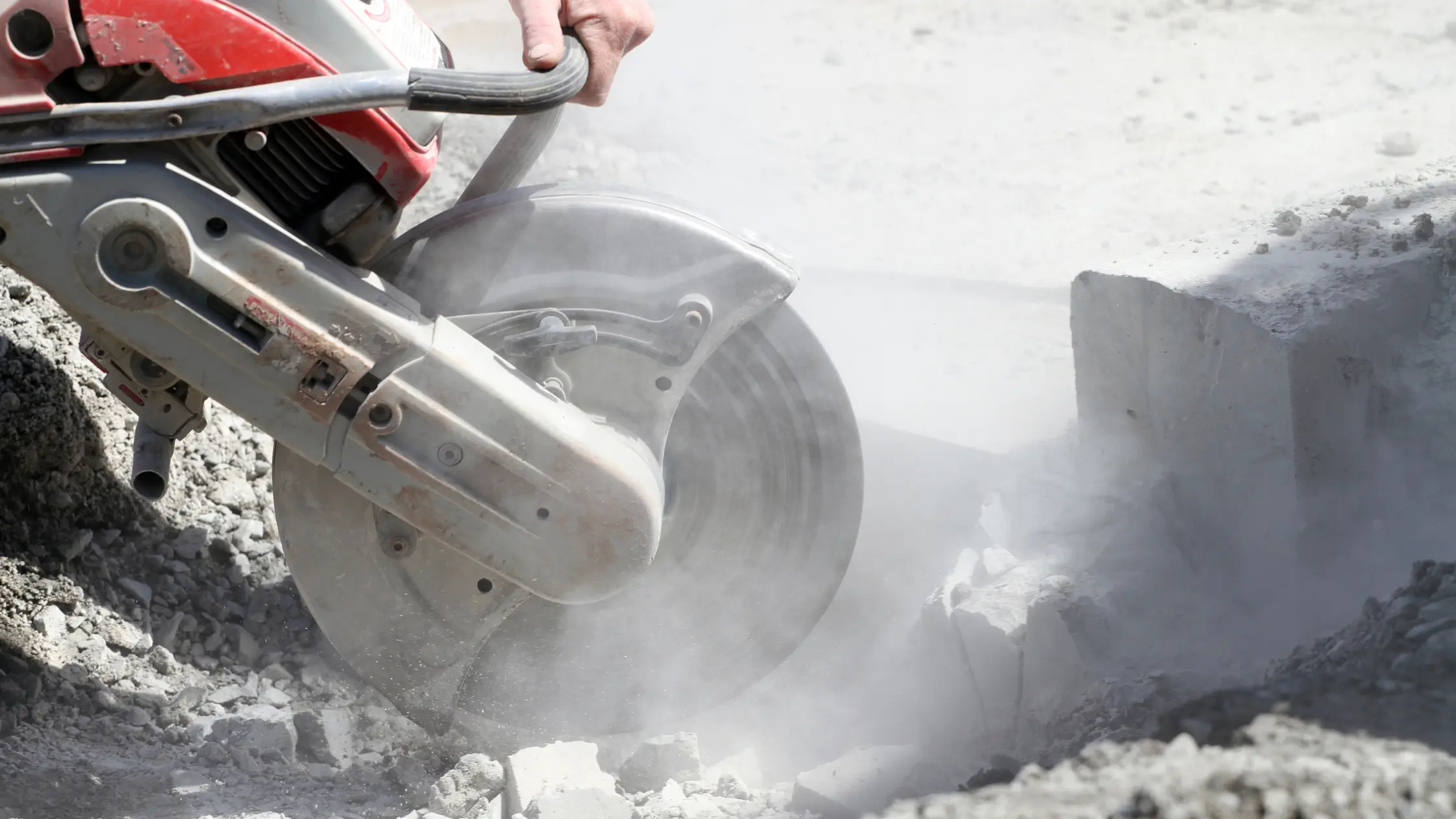
If you’re in concrete cutting, coring, grinding, or demo, silica dust is part of your daily reality. And the standards around it have tightened significantly. OSHA’s permissible exposure limits have come down, enforcement activity has gone up, and the expectation that you have documented, active dust control programmes — not just PPE on a shelf — is now non-negotiable.
At Orca Concrete, we’ve taken this seriously because the consequences of not taking it seriously are permanent. Silicosis doesn’t go away. So we’ve invested in wet cutting methods, local exhaust ventilation, proper respiratory equipment, and health surveillance for our crews. It’s not optional. It’s the job.
If your dust control programme hasn’t been looked at since 2023, you’re likely behind the current standard. Don’t wait for an inspection to find that out.
Psychosocial Risk: Yes, This Applies to Us Too
I’ll be honest, when I first heard “psychosocial risk” in the context of a concrete operation, my initial reaction was scepticism. We’re in the trades. We cut concrete. But the more I looked at it, the more I understood why it matters.
Our crews work physically demanding jobs, often in high-pressure environments, on tight schedules, sometimes dealing with difficult conditions or near-miss situations. That carries weight. And regulators are increasingly treating the management of workplace stress, fatigue, and psychological safety as a mandatory obligation, not a wellness initiative.
What that means in practice for an operation like ours:
- Fatigue management for crews working long shifts or early starts needs to be explicit, not assumed.
- People need to feel they can raise concerns without it costing them their job or their standing on the team. That culture has to be built deliberately.
- If someone on your crew goes through something traumatic on a job site, you need a pathway to support them. That’s not soft — that’s operational.
- Line supervisors need to know what to look for and what to do. You can’t manage what you’re not trained to see.
Ergonomics: Small Changes, Real Results
This one is easy to underestimate because the consequences are slow-moving. Musculoskeletal injuries don’t usually happen in a single dramatic moment; they accumulate over months and years of repetitive work. And by the time they show up as claims or absenteeism, the damage is already done.
Inspectors are now routinely including ergonomic compliance in site audits. They want to see manual handling assessments, task rotation plans, and evidence that you’ve actually thought about how your people’s bodies hold up over time. We’ve made some relatively simple adjustments in how we structure certain tasks for our crews, and the early indicators — reduced complaints, fewer strain-related absences — have been encouraging. The ROI on this kind of investment is real.
What Inspectors Are Looking At Right Now
Based on what we’re seeing in the DFW market and conversations with others in the industry, here’s where scrutiny is currently focused:
- Risk assessments that are current and site-specific — a generic document from two years ago won’t cut it.
- Evidence of genuine worker involvement in safety planning, not just signatures on a form.
- Subcontractor oversight — if someone on your job site gets hurt and they work for a sub you hired, that’s your problem too.
- Emergency response readiness — documented plans plus evidence you’ve actually practised them.
- Health surveillance records for crews exposed to silica, noise, or other hazardous substances.
- Change management — when something changes on a job site (materials, methods, equipment), does your hazard identification process respond to that? Inspectors will ask.
The pattern is consistent: inspectors aren’t surprised that you have policies. They want to see that your policies are alive in your operation — not filed away somewhere.
The Bottom Line From Where I Sit
I’ve spent my career building organizations that perform at a high level. And one thing I know for certain is that high performance and a strong safety culture are not in tension — they go together. The teams that cut corners on safety are not actually moving faster. They’re just deferring costs to a later date when those costs will be much higher.
At Orca Concrete, our standard is simple: precision cuts, expert crews, zero excuses. That applies to every job, for every client, with every crew member. And it definitely applies when it comes to sending our people home safe at the end of the day.
Staying current on H&S standards isn’t a compliance exercise. It’s part of building an organization that lasts — and one that people actually want to work for.
If you’re a safety professional, an operator, or a business owner in this industry and you’re not sure where your programme stands against 2026 requirements, start there. Ask the honest question. The answer might be uncomfortable, but it’s a lot less uncomfortable than the alternative.